
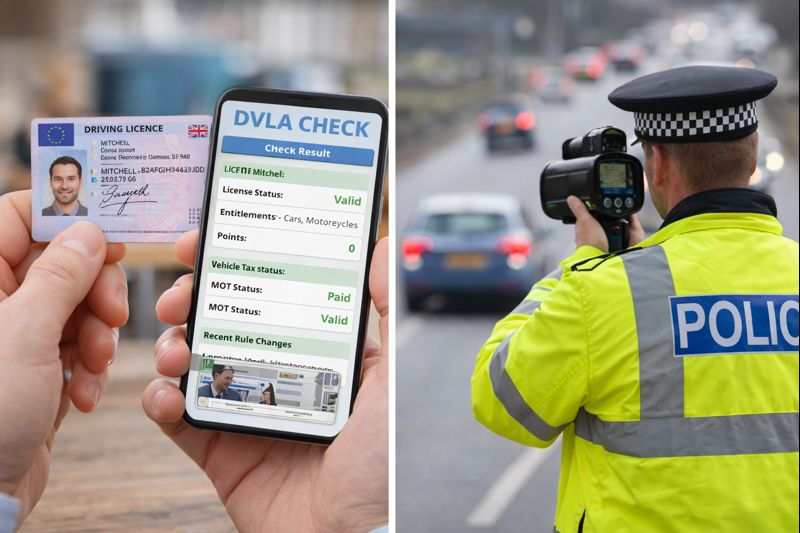
Every driver in the United Kingdom interacts with the DVLA more often than they realise. Even when no paperwork is being filed, your licence, vehicle, and personal details are constantly referenced by insurers, employers, police systems, and rental companies. A DVLA check is not just a formality. It is the backbone of legal driving status in the UK.
When records are outdated or misunderstood, the consequences can escalate quickly. Invalid insurance, missed penalties, delayed renewals, or restricted driving rights often start with something as simple as an unchecked DVLA record.
This page explains how DVLA checks actually work, what drivers often overlook, how recent DVLA driving licence changes affect everyday motorists, and when extra support becomes the practical option.
A DVLA check pulls together all official data linked to a driver or vehicle. This includes licence validity, endorsements, vehicle registration details, tax status, and MOT records. What matters is not only what you know about your licence or car, but what the DVLA system shows at the time of verification.
A DVLA check is commonly required when applying for insurance, changing jobs, renting a vehicle, or renewing documents. If the information does not match across systems, delays or rejections are common. This is why even experienced drivers benefit from reviewing their DVLA status regularly rather than waiting for a problem to appear.
A DVLA car check, also referred to as a DVLA reg check, is one of the most important steps before buying any used vehicle in the UK. This check confirms that the registration number matches the official DVLA record and that the vehicle is legally permitted to be on the road.
A proper DVLA car check helps identify issues that are not always visible during a physical inspection. These checks highlight registration history, tax status, MOT validity, and technical specifications tied to DVLA registrations. When details do not align with the seller’s description, it is usually a warning sign that should not be ignored.
Many ownership disputes and resale problems trace back to skipped or rushed DVLA reg checks.
DVLA registrations apply to both vehicles and drivers. Any change to your personal situation that affects driving must be reflected in DVLA records. This includes address changes, name changes, and medical disclosures.
Drivers often underestimate the importance of address accuracy. An outdated address can mean missed renewal reminders, penalty notices, or enforcement letters. In some cases, drivers only discover an issue after enforcement action has already begun.
Keeping DVLA registrations accurate protects you legally and prevents administrative escalation.
The DVLA driving licence is not just a physical document. It is a digital record that defines what you are legally allowed to drive and under what conditions. While driving entitlements may last decades, the photocard licence must be renewed every ten years.
Your DVLA driving licence record includes:
Driving with an expired photocard is an offence even if your entitlement remains valid. This detail causes frequent problems during roadside checks and insurance claims.
DVLA licence renewal is a routine process, yet delays are common. Many drivers assume renewal is automatic or instantaneous once submitted online. In reality, several factors can slow processing.
Renewal delays often occur due to mismatched personal details, unclear identity verification, or medical reviews triggered by existing records. When drivers attempt to DVLA renew driving licence documents without confirming these details first, applications may stall without clear feedback.
Driving during a pending renewal is only permitted if DVLA has formally acknowledged receipt of the application. Without confirmation, insurance coverage may be compromised.
New DVLA rules for UK drivers focus heavily on enforcement accuracy rather than paperwork volume. Data sharing between DVLA, insurers, NHS systems, and police databases has increased significantly.
Recent DVLA driving licence changes affect drivers in several ways:
These updates mean that informal assumptions about licence validity are no longer safe. Records must be correct, not just close enough.
Insurance providers rely directly on DVLA data when underwriting policies and processing claims. Any mismatch between your declared information and DVLA records can invalidate cover.
Issues commonly arise when photocard expiry is overlooked, penalty points are undeclared, or DVLA registrations still reflect an old address. These discrepancies often surface only after a claim is made, when resolution is already difficult.
A routine DVLA check before renewing insurance reduces this risk significantly.
Drivers are encouraged to use online systems where possible, but there are situations where you must contact DVLA directly. Knowing when and how to do this prevents unnecessary delays.
Drivers usually need to contact DVLA for licence renewal issues, corrections to DVLA registrations, medical review outcomes, or lost licence replacements. Keeping written records and reference numbers is critical, as verbal confirmations carry little weight if a dispute arises.
A full UK driving licence is often required sooner than drivers expect. Employers, rental companies, and insurers increasingly require verified licence status rather than provisional or transitional documentation.
Situations where a full UK driving licence is commonly required include employment checks, long-term vehicle leasing, and insurance applications without premium loading. Delays or rejected applications can limit mobility and income opportunities.
For drivers facing repeated delays, complex records, or urgent timelines, structured assistance can simplify the process. At DVLA Documents we are here for you to provide more information about obtaining or resolving issues with a full UK driving licence.
This service is often used by drivers who need compliant results without prolonged administrative back and forth.
DVLA systems are now tightly integrated with enforcement and verification platforms. Errors are detected faster, and penalties are issued with less manual review. This shift places greater responsibility on drivers to ensure records are accurate at all times.
Regular DVLA checks, timely DVLA licence renewal, and awareness of new DVLA rules for UK drivers protect more than convenience. They protect your legal right to drive.
Staying compliant is no longer about avoiding paperwork. It is about maintaining uninterrupted access to the road under increasingly strict verification standards.
For any other solution we are at your disposal
Contact UsWhat Oue Client Say About Us

I couldn't have asked for a better experience in obtaining my driving licence. The Driving Licence Website provided me with all the necessary information, step-by-step guidance, and excellent customer support throughout the process. Thanks to them, I passed my test with flying colors!


Converting my international driving licence to a UK driving licence seemed like a daunting task, but the Driving Licence Website made it incredibly easy. Their comprehensive resources and clear instructions helped me navigate through the requirements smoothly. I highly recommend their services!

I had lost my driving licence and needed a replacement urgently. The Driving Licence Website saved the day! Their quick and efficient service ensured that I received my replacement licence in no time. Thank you for your prompt assistance!

As a first-time driver, I was nervous about the entire licencing process. However, the Driving Licence Website provided me with invaluable resources, practice tests, and expert guidance that boosted my confidence. I'm thrilled to say that I passed my test on the first try!